Skip to content

Posts from the ‘Kathleen’ Category

Potential energy

Many of my friends have been asking me if I’ve made a New Year’s resolution. And, as a logical, linear thinker, I’ve been pondering how best to respond! The turning of the calendar seems like a logical time to think about where we’ve been and where we want to go as individuals and organizations. Not only is it a “new year,” it is half-way between the season where we have the least and most amount of daylight.

Evaluating and taking stock can imply either that all was well or that things had gotten wildly off track. As is often the case, the reality lies somewhere in-between. In recent posts, I’ve listed some questions for reflection. As I watched the sunset last night, I considered another idea. What if each thing we do not only delivers value in the present, but creates potential for the future? How would we embrace and leverage the potential energy? How would we use that energy to generate momentum needed for adapting to change and creating new ideas?

In the physical world, gravity acts to increase potential energy. To further the analogy, what are the relationships and market forces that can multiple our potential?

The other kind of potential energy in the physical world is elastic potential energy. The further something is stretched, the greater the potential energy. Again, how will we stretch this year to increase our potential?

We as individuals and organizations are standing at the top of the proverbial 2011 hill. How will you use and build potential?

Idea for reflection – 27

The world we have made, as a result of the thinking we have done thus far, creates problems we cannot solve at the same level of thinking at which we created them.
Albert Einstein

Idea for reflection – 26

Light in the darkness

December is often refered to as the “season of light.” There is no small irony in this as we in the northern hemisphere live through the shortest days of the year. It is a time when many organizations stop to re-vision. As goals and roles are reviewed and renewed, here are some questions to jumpstart the process:

  • Why are these goals important for our organization? For you as a team member?
  • What is included in our vision for success?
  • What about these goals inspires you to give your best?
  • How will you and your team take the first steps toward embracing and realizing our vision and supporting goals?

One of the organizations I’ve associated with this year has an internal tagline (I paraphrase), “We act as if our vision were already reality.” Each of us must choose to act, even with imperfect knowledge, exercising good judgment and believing in the possibilities as we re-vision and enter into 2011. May light shine in the darkness.

Abstract perspectives

Jon recently walked through the door with this photo in hand. What is it? My father-in-law, who is a professional artist, would say, “It’s whatever you want it to be.” The value of the abstract is that it challenges our imagination and creativity. It opens the door to all possibilities.

What would you imagine if anything were possible? If you had three wishes to increase the health of your organization in 2011, what would they be? Where are the greatest opportunities for realizing these dreams? Where will you start? How will you take the first step?

The door

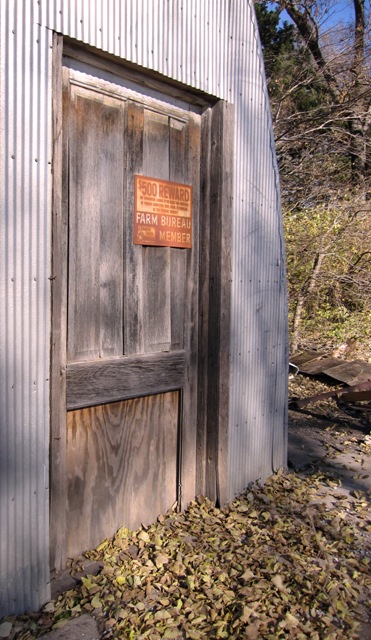
A few days ago, we were on a walk along the Sand Creek Trail and took a byway that we hadn’t explored. We encountered an old barn with doors that had been closed long ago. Leaves new and old drifted against the bottom. If there had even been a handle, its location had long been covered over ….

I’ve been considering that door with no handle as one year ends and another begins. What are the things that are behind doors that need to be opened up and aired out? What are the things that need to be given away, torn down, or permanently closed? What doors do we want to open, walk through, and explore on the adventure that is Friesen Group?

Part of the power of a blog is that ideas can be shared in short snips. While the questions listed here are big questions, I invite you to join me in taking short snips of time in the next few days. Use the time snips to provoke your thinking, to make meaning and insight, to remember – as we enter into 2011.

The unexpected snowman

Going for a walk this weekend, I came around a corner and was eye-to-eye with this snowman. Yes, he is mounted on a tree in the woods!

The unexpected is often surprising and unsettling. When organizations encounter the unexpected it can create significant disruption as individuals and teams work to come to terms with what has happened.

When organizations encounter the unexpected, the best leaders remain calm and level-headed. Leaders remind people of the focus of the organization. They don’t hide the facts, even when the news is bad. They observe and read the situation and people around them. They encourage people to experience their emotions, but then ask them to turn their attention outward.

Leaders shift the focus outward by engaging those around them in learning. They ask questions:

  • What can we learned from this situation?
  • What decisions need to be made?
  • What risks are we willing to take?
  • What do we not want to compromise?
  • What are the most creative solutions you can brainstorm?

Being a leader is not about having a title or a position high on the organization chart. Being a leader means the ability to act with an authenticity that draws people together and motivates them to reach common goals. Being a leader is about embracing the uncertainty around every corner calmly and steadily .

“The unexpected always happens – the unexpected is indeed the only thing one can confidently expect. And almost never is it a pleasant surprise.” – Peter Drucker

Engaging Emergence: Turning upheaval into opportunity

Peggy Holman’s new book, Engaging Emergence, presents practical and creative ideas for working with change.

She posted a blog entry, outlining her book in 824 words. It’s a good way to get a quick introduction to her writing and ideas.

Uncertainty as opportunity
Unwoven threads

Sustaining change

Sustainability has become one of those buzzwords that I hear flying around my client and community circles. People want to create sustainability in everything from agriculture to business to endowment funds. I’ve heard others discussing the desire to “leave a legacy” for future generations. All of these are well-meaning intentions, but what is hidden beneath the buzzword?

Creating sustainability often means putting a system structure into place that is designed to produce the most benefit in the present while maintaining those benefits in the future. I do not deny that we need systems that function efficiently and effectively in the present, but is the ultimate goal to maintain them for the future?

Another word comes to mind: chronic. This word is usually used in association with a disease or other undesirable condition that has to be managed.  C.S. Holling said, “Placing a system in a straitjacket of constancy can cause fragility to evolve.” In other words, if we carefully  maintain a system, we run the risk of eventually creating weakness that leads to a chronic condition. Chronic conditions take much more time in management, and, after a period of time – perhaps a few years or even as long as a generation – can lead to the death of the system.

So should the idea of sustainability be abandoned? The answer isn’t to be found in keeping our organizations and ourselves in chaos. Instead, I invite you to consider expanding the goals of sustainability from only maintaining a static, stable operating environment to include building a resilient space.

Lest you think I’m piling buzzword on buzzword, I’m defining resilience as creating a bounded space where the system can function effectively and efficiently and have elastic in its boundary. That elastic allows the system to learn, change, and grow in new directions in response to changing conditions around it, while offering a measure of protection. It is both stable and ever changing. If we are going to “leave a legacy,” our organizations must embrace the paradox of sustaining change.

The naked presenter

At first glance, Garr Reynolds’ new book, The naked presenter, is another entry in the “how to deliver presentation” genre. But as I read through the book, I found myself making notes. The notes were not about how to improve my presentations, but about how I approach change management.

As an organization development practitioner, I spend my time working with change management. This morphs through training – to teach something new, facilitation – where knowledge and ideas are exchanged,  and, communication – designed to inform, motivate, and effect behavior change. Reynolds writes about all of this and more. He integrates information from interpersonal neurobiology, personal observation of his surroundings, and jazz musicians.

He does write about making effective presentations and improving public speaking skills. But the most important idea I encountered in the book is that “lessons are everywhere.” It is up to each of us to inquire into everyone and everything we encounter, asking how it impacts who we are and what old and new lessons we take away.

Each of us has many opportunities to connect with others. Knowing who we are and what matters is the foundation. Knowing why we are speaking, along with how and what we are communicating, allows us to build and effect change.

If you like to walk around the neighborhood block backward, seeing the roof lines and landscape from a new perspective, I recommend reading this book and watching for patterns that reach far beyond presentation design.

Who are you becoming?

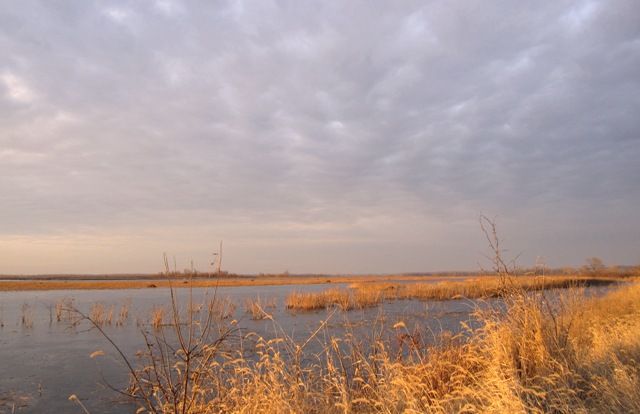
This past weekend Jon and I went on an adventure to Squaw Creek National Wildlife Refuge. A decade ago, I used to make an annual pilgrimage to the refuge every December for their Eagle Days celebration. The time there brought back wonderful memories of friends and the experiences we shared. It was a reminder that it is important to choose how I spend my time.

Daniel Pink recently asked a similar question, “Is what I’m doing right now going to be of lasting value to me or to others?”

In my world, time gets consumed online in-between meeting after event after meeting all while texting to keep business and family schedules synced and moving. The reality is that I’m riding along on the wave and taking my family and business along for the ride. What I choose directly influences who I become and what lasting value I create.

It’s time to stop and ask the question, “Is what I’m doing right now going to be of lasting value to me or to others?” And, then reflect on how I am choosing to use my time.

And yes, we saw over 30 eagles.