Skip to content

Posts tagged ‘Personal Development’

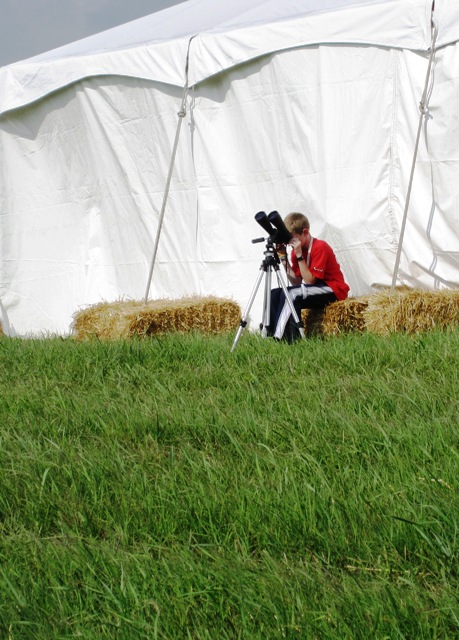
Animals and other shapes in the sky

I was thinking about an organization that schedules a monthly day of reflection for members of its leadership team. Each member gets one day a month – when they do not show up at the office, but take time for themselves. Through personal relationship, I’ve learned that all kinds of things happen on those days, from a long motorcycle ride through the Flint Hills to a morning spent reading at a coffee shop to an afternoon spent drinking iced tea and listening to music on the back porch.

The value to the organization? Incalculable. When these leaders come back refreshed, they can bring a better perspective on themselves and their role as well as on the organization. I’ve seen creative and inspiring ideas come from their time away.

In that spirit of reflection, today’s New York Times has an article about wandering minds. I was in interested to learn that our minds wander about 30% of the time. Here’s the summary quote:

“For creativity you need your mind to wander,” Dr. Schooler says, “but you also need to be able to notice that you’re mind wandering and catch the idea when you have it. If Archimedes had come up with a solution in the bathtub but didn’t notice he’d had the idea, what good would it have done him?”

I’m asking myself if I am being intentional about creating space for my mind to wander – time to wander when I’m observing it and discovering new ideas. Or am I scheduling my life full from morning-to-night with meetings and more hours that I care to admit writing and working at the computer? My guess is that I need to build in some intentional procrastination in order to achieve better incubation.

What animals or shapes have you seen in the sky today?

Waiting for feedback?

Over the last 2 or 3 months, I’ve written about the importance of leaders and managers giving feedback and the ongoing need to reinvent management as we know it.

So, it’s time to turn the tables and ask all employees to look in the mirror: Am I waiting for feedback? Why am I waiting for someone else to approve my work, to make a suggestion for improvement, or to give permission for a next step?

While no one wants to step over boundaries, the boundary line is more elastic than most of us think it is. And, I would argue that most bosses don’t want to spend all of their time supervising, let alone micromanaging. What many of them want is for people to be self-motivated and self-starting – to be self-employed at work:

Here are some of the unwritten attributes that define the self-employed at work phenomenon, which I’ve written about before from the boss’ perspective:

  • Be creative and inventive – see your work as owned by yourself, not by your employer or supervisor.
  • Be self-initiating and self-evaluating – identify problems and issues and evaluate what is working and what isn’t, suggest and initiate potential solutions. Don’t wait for others to do it for you.
  • Take responsibility – see yourself as an actor that participates in creating the internal and external work environment, you are as responsible for what happens in the organization as the next person, including your supervisor.
  • Be professional – master and author your work role and career. Don’t be an apprentice forever, continually imitate others, or only mimic the company line.
  • See the system as a whole – look beyond your own role and part to see the whole, your relationship to the whole, and how the parts work together.

In the end, each of us has to value and find meaning in what we do each day. So, let’s stop waiting for the person in the next cubicle, across the hall, or in the corner office to provide feedback, give approval, or check the “completed” box. It’s up to each of us to try out new ideas, move existing balls down the field, and be responsible for just getting it done. And, yes, we are capable of doing it – without waiting for feedback.

Idea for reflection – 13

Gaeddert - The Plainsman

You need a story to displace a story. Metaphors and stories are far more potent (alas) than ideas; they are also easier to remember and more fun to read.
  – N. N. Taleb, in Prologue to The Black Swan 

Idea for reflection – 12

Idea for reflection – 12

Viewing the Sun at Symphony in the Flint Hills

Here’s a quote for reflection:  

The task of leadership is to create an alignmnet of strengths in ways that make a system’s weaknesses irrelevant.
  – Peter Drucker   

Idea for reflection – 11

The space between words

Phil Jackson used to run Chicago Bulls practices in complete silence (Sacred Hoops, p. 119).

I’ve used Nancy Kline’s ideas about silence and listening, presented in Time to Think. It allows each person in a group 5 uninterrupted minutes to speak to the topic at hand. If the individual chooses not to use all of their time, the remainder of their time is spent in silence.

I’ve watched groups of adults and of teenagers struggle with the times of silence. In one case, even 2 minutes to speak or be silent unnerved several individuals.

What would it mean to meet in silence? No cell phones. No e-mail. No video games played under the table. What kinds of connections could be created that would not exist in any other environment?  What would emerge from deep listening?  What would occur as a result of time spent reflecting together?  How would we as individuals be changed?  How would our organizations be changed?

Are we as aware of the space between words as of the words themselves?

Your Brain on Computers

Yesterday I had a conversation with an 18-year-old who told me that he had started turning off his cell phone for several hours each day. “Off the grid” he was able to focus on accomplishing tasks, getting things done efficiently, and interacting with people who were physically present.

Is the fact that disconnecting from the electronic world allows us to engage more fully in the experience around us a revelation? I’m not suggesting that we throw all of our electronics in the pond, but I do believe it is useful to be aware of their impact on us.

The New York Times is running a series of articles about recent research on how technology impacts our brains, relationships, work skills, and comprehension. Here are links to the articles and a couple of tests you can take to assess your own level of attention:

An Ugly Toll of Technology: Impatience and Forgetfulness
by: Tara Parker-Pope

Hooked on Gadgets, and Paying a Mental Price
by: Matt Richtel

More Americans Sense a Downside to an Always Plugged-In Existence
by: Marjorie Connelly

Links to test your focus and your ability to multi-task.

As for me, I’m headed for lunch with a friend  – and, I’m turning off my cell phone in order to fully appreciate my time with her. I will continue to choose to take time to reflect and unwind off the grid.

Defying the rat race

I’m defying the rat race and stopping to see the world around me, which today is near Hesston, Kansas:

Hesston Friesen Flowers


Late Spring Hesston Barn


Late Spring Kansas Wheat II

Five rights

In our work on the Kansas EMS transition curriculum project, we’ve been creating media and activities. As an outsider to EMS, I was struck late yesterday with a decision tree that is used to think critically about medication delivery. It has “five rights” or things that must be true in order for the medication to be given:

  1. Right patient?
  2. Right medication?
  3. Right dose?
  4. Right route?
  5. Right time?

I am considering how these critical thinking questions can be translated into an organization’s or individual’s decision making process:

  1. Is this the right person? Team? Client?
  2. Is this the right action? Process? Intervention?
  3. Is this action in proportion to the situation?
  4. Is this the right course? Means? Direction?
  5. Is this the right time?

The other reflection is how often I assume information doesn’t apply to me. I can quickly jump to the conclusion that a process used everyday by EMS providers doesn’t impact me. Yet every moment is an opportunity to actively engage in learning. All that’s required is that I reflect on my encounters with information, people, and organizations – seeking to learn and integrate my experiences.

What are the opportunities you have to reflect and integrate?

Idea for reflection – 7: Conducting

View from the Conductor's Circle

A man who wants to lead the orchestra must turn his back on the crowd.
 – James Crooks

And a TED talk by a conductor: “Itay Talgam demonstrates the unique styles of six great 20th-century conductors, illustrating crucial lessons for all leaders.”

Idea for reflection – 6

Idea for reflection – 6: An ordinary life

View from the Bloch Building

I’ve been pondering a short opinion piece that I read today in the New York Times and a couple of quotes:

… I believe there’s no such thing as false hope: all hope is valid, even for people like us, even when hope would no longer appear to be sensible.

All I wanted was ordinary life back, for ordinary life, it became utterly clear, is more valuable than anything else.

And so, I stop to reflect on hope and gratitude for ordinary life.

Idea for reflection – 5