Skip to content

Posts tagged ‘Personal Development’

Renewal by fire

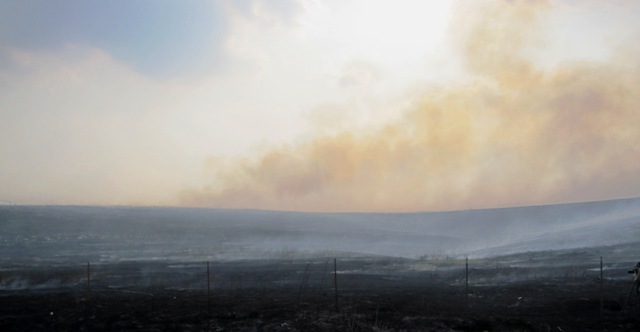
Kansas Flint Hills Spring Burn III

Each spring Kansas Flint Hills ranchers use prairie fire to create renewal. The fire burns weeds and dead plant material, clearing the brush and dead grasses in its path.  
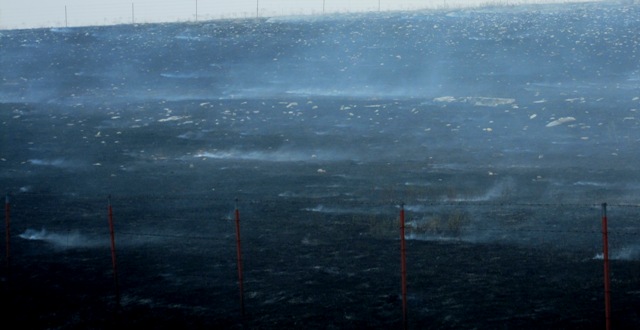
Kansas Flint Hills Spring Burn II

Last weekend we watched as ranchers sowed fire across the prairie creating landscape that looks otherworldly.   
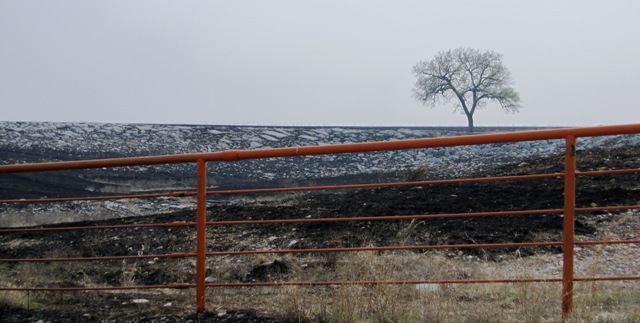
Kansas Flint Hills Spring Burn I

And I pause to reflect on what fires are burning in my life and the organizations to which I belong. Do I spend too much time fighting the fires rather than allowing them to burn away the deadwood? What do I need to stop doing, to let go of, to turn away from so that new ideas, new life can spring up?   

On our trip through the Flint Hills, a rancher told us that it takes about 4 days for new grasses to spring up, providing stunning green vistas. And on the Kansas flatlands, the winter wheat – dormant all winter – is growing again. 

Kansas Prairie Spring I

And so, I reflect and revisit my dreams, hopes, and goals looking for signs of renewal in my life and in the wider systems of which I’m a part.

Idea for reflection – 5

I have no special talents. I am only passionately curious.
 – Albert Einstein

Idea for reflection – 4

Excellence is a habit

I like this quote that I found in The Mind & The Brain (Schwartz & Begley): 

“We are what we repeatedly do. Excellence, then, is not an act, but a habit.” – Aristotle

From brain research done in the last 5 years, we learn that neurons (brain cells) that fire together wire together. The question is, “What do we repeatedly do?” We can either be creating excellence or mediocrity.

Daniel Pink recently listed his seven rules for writing. I’m going to modify a few of them here along with my own comments and ideas about maintaining daily habits.

  • Show up. Be present in each moment. It’s the only one I have.
  • Be useful. Seek out ways to be useful whether it’s helping with a tedious task at the office or putting dishes in the dishwasher.
  • Move. Exercise releases the stresses that build up over time and allows ideas to come to the front of my mind.
  • Connect. Have a meaningful conversation with a friend or co-worker each day. If you ask, “How are you?”, stop to really listen to the answer. 
  • Be thankful. Look for one thing each day to be grateful, even if it’s simple like the sunshine falling on the floor or a beautiful raindrop hanging from a branch.
  • Take one action. Act on and do one thing each day to advance your dream.
  • Eat well. Food nourishes me and gives me energy, which is why I choose whole foods as often as possible. (Many of my readers know that I’ve followed the Dean Ornish program since 1997.)
  • These rules work for me. Your mileage may vary.

I remind myself to keep the momentum going. Like turning a flywheel, restarting a habit takes far more energy than maintaining one. As we commit to develop personal habits of excellence, our organizations and families will change along with us.

What’s your experience?

Today in his blog, Work Matters, Bob Sutton told an interesting story on the worst advice he was given and has this interesting paragraph at the end of his post:

One of my mottos in life (which I first heard from a Stanford undergraduate years ago named Kathy) is, “Don’t believe everything they tell you.”  This is especially true if they add something like, “I have been in the business for 25 years and I know what I am talking about.”  As one of my former students, Andy Hargadon used to say in response to this line, “Do you have 25 years of experience, or have you experienced the same year 25 times?” (bold face, mine)

I found this worth reflecting on for a mid-winter Monday. It also brought to mind the thinking I was doing in early January about goal setting.

Clearing the Brain’s Inbox

Neuroscientists have created a large body of evidence over the years for the importance of sleep. Now researchers have added new understanding to why sleep matters. When we sleep, information that is stored in our short-term memory (located in the hippocampus) moves to longer-term memory storage (located in the cortex). We process new information, create new neural pathways, and open space for new data and experience. This process happens during stage 2 REM sleep.

Of note is that it is equally advantageous to sleep before learning as well as after learning. Researchers say that sleeping before learning allows the brain to become like a dry sponge that is able to then absorb liquid. Enter the midday nap: data showed those who napped were able to integrate information more readily than those who did not. It allows the brain to take a “mental time out”. Even if you don’t sleep, a midday rest can produce similar results.

A good night’s sleep has not lost its importance. Most people know that stage 4 REM sleep is necessary for doing complex thinking and creative remapping of experiences and information.

In Brain Rules, Medina summarizes the importance of sleep by looking at its reverse, “Loss of sleep hurts attention, executive function (decision-making), working memory, mood, quantitative skills, logical reasons, and even motor dexterity.”

Some organizations have set up nap-pods. In day-long kindergartens and in some first grade classes an afternoon nap time still happens. How can our organizations and learning centers integrate the benefits of rest? Let the midday naps begin!

Procrastination vs. Incubation

As someone who often sees herself as a procrastinator, this article offers a new perspective. I have often defined my operating mode as procrastination. And, it can look this way from the outside perspective. You’ll often find me setting aside 3 or 4 hours each day to read and reflect, go on a walk, or drink a cup of tea or coffee while having a conversation with tribe members and friends. And yes, from the outside, it looks as though nothing is happening. But when the project deadline arrives, it is delivered on time and within budget.

Robert Biswas-Diener suggests that the opposite side of the procrastination coin is incubation. He defines incubation as “a clear sense of deadlines, confidence that the work would be complete on time, certainty that the work would be of superior quality, and the ability to subconsciously process important ideas while doing other — often recreational — activities.” Acknowledging incubating as a strength was a breath of fresh air. In sharing this insight with a friend, yes – in a conversation over coffee, she added that incubation can be a big part of creativity and innovation.

As I reflect further, this idea fits in with the reading that I’ve been dong on interpersonal neurobiology and how our brains most effectively process and manage information. Our brains need a balance of sleep, exercise, good nutrition along with time for stimulation and relaxation in order to function at peak levels. And whatever one calls it, setting aside time for incubation, curiosity, thought experiments, reflection, or exploration, will allow us all to function at our best.

I will continue to plan and set deadlines. I will set realistic expectations for myself. I will communicate with clients and co-workers. But I stop judging myself for taking time to incubate ideas and projects.

The dragon next door

I’ve been hearing from readers and friends about the turmoil in their organizations. They attribute the turmoil to varied external causes: economic instability, a shift in leadership, internal politics, or organizational jerks.

Whatever the cause, as JRR Tolkien said in The Hobbit, “It does not do to leave a live dragon out of your calculations, if you live near him.” I do believe that how we choose to live with the dragon next door is more important than the turmoil, anxiety, and suffering. I do not believe in being naively optimistic; my life has had its share of pain.

Is it possible to find hope in the midst of turmoil? I will use the analogy of a film. If you look carefully at a strip of film you will see a series of small, individual, framed images aligned in a row. When the film is projected on a screen, you will see a moving picture – a movie. A film is both individual photos and a movie. It depends on your experience, your point of view, your focus.

For me, hope comes from focusing on the big picture of organization and personal values, which for Friesen Group include trust, creativity, and abundance.  Hope comes when I manage the individual frames with my best efforts. Sometimes my best effort requires simply recognizing and accepting difficulties and unfairness which come as a part of any life. At other times it means being willing to walk away from a bad situation and let it go. But hope always comes back to the core values of love and compassion for others and for myself.

In the West, our stories of dragons are about battling dragons that represent darkness, fury, danger, and death. But in the East, dragons are gentle and friendly, symbols of change and promise. It depends on your point of reference. The paradox that is life continues. We live with certainty and uncertainty, hope and turmoil. We live with the dragon next door.

Strong opinions, weakly held

This is a cross-post from the Friesen Group Kansas EMS Transition project blog. It is a topic of interest to everyone who engages in organizations.

As dialogue, debate, and discussion continue around various EMS Transition questions, I was thinking about a post on Bob Sutton’s blog where he talks about the need for strong opinions, weakly held. The argument originated with persons from the Institute for the Future.

It starts by stating that we each need to have strong opinions. When we care passionately about something, we are willing to put our energy and time into learning about it, understanding it, and defending it. But the argument doesn’t stop there. The rest of the argument is that we need to hold our strong opinions loosely. If we’re too attached to our opinions, we lose the ability to hear and see other evidence and alternative ideas.

I close this post with a quote from Sutton, “Wisdom is the courage to act on your knowledge and the humility to doubt what you know.”

passion AND indifference

In the interest of looking at all perspectives, I have been reflecting on the need for balance between passion and indifference. In organizations, managers spend time and energy seeking to motivate people to passion for their work. But, with too much passion managers can roll over people and miss important cues indicating risk or simply other options – including better ones. With too much indifference managers can become lethargic and stagnate.

There is balance in the world: a time for reflection and stepping back to see more clearly, and a time for passionate engagement.

If you’re interested in thinking further about this dichotomy, check out Bob Sutton’s post on 10 things he believes about the workplace or David Maister’s post on Passion, People, and Principles.

Unfinished business

At the end of each day, I contemplate my to-do list. I have never had a day when everything is checked off of the list. And yet, on the next day I’m often starting new tasks and engaging in activities that weren’t even on the list from the day before. From time-to-time, I reflect on the list and delete things for my “stop doing list“. I have books stacked by my chair, always several in progress. I have far away friends and family that I’d like to go and spend a week visiting. I have places I dream of going and others I long to return to for further adventures.

Today I’m reflecting and reminding myself that life is a process, not an accomplishment – a journey, not a destination. Work, chores, and activities are better represented by a tapestry that each of us is weaving. The threads are our work, hobbies, friendships, travels, and families. While checking off tasks – finishing part of the design  – is a good thing, beginning new relationships and activities – discovering new threads – is just as important. Weaving the varied threads together and adding new ones are the stuff of life.

Unfinished business is part of who we are. We each weave, rest, and weave throughout the times and seasons of our lives. None of us will complete our tapestries. When I’m gone, perhaps someone will pick up some of my threads and begin weaving them into their own tapestry. In the meanwhile, I don’t have to get everything done perfectly. I need to keep weaving and discovering threads, flowing through the seasons of life. A life well-lived will leave a lot of hanging threads – a lot of unfinished business.