Skip to content

persistance of memory – What have you learned today?

My Aunt Elizabeth and I were talking last night about the fact that each of us remembers different shared experiences. What she recalls easily – I do not, and visa versa.  I remember my Uncle Don taking us for a drive on Interstate 80 in Nebraska before it was paved. We drove down the paved ramp at Beaver Crossing onto the eastbound lanes, then covered only in gravel. We cruised with the convertible top down at 20 m.p.h to the next exit at Milford. What makes that memory so strong for me? Are memories personal or are they constructed through the stories we tell?

Neuroscience is still exploring how memories are made and persist. Yi Zuo of the University of California, Santa Cruz, and her colleagues assessed how dendrites (branches between neurons) form in mice based on three different types of activities, compared to a control group that did nothing out of the ordinary. Her results: dendrites appear, grow, persist, and disappear in response to training and learning.

 “I think it is a very active process,” Zuo says. “The neurons work very hard to form clusters, to place spines close to one another. Even after a short training period on the first day, a mouse makes a lot of new spines—they might make double what they make in an ordinary day, but these spines are not clustered. Only after repeated training are they clustered.” Previous work in her lab demonstrated that new neural connections form within an hour of the training session.

As human beings, memories are created because our brains are constantly open to change. Memories grow and persist when we are actively experiencing, discovering, learning, and telling our stories. Life-long learning is essential.

What are you actively learning and discovering? What memories have shaped you or your organization?

The Biology of Learning
Spine Tuning: Finding Physical Evidence of How Practice Rewires the Brain


Habits for organizations and individuals

Charles Duhigg’s new book, The Power of Habit: Why We Do What We Do in Life and Business, uses case studies and stories along with descriptions of current research on habits and change to demonstrate the power of habits. Habits of individuals, successful organizations, and societies are held up as examples.

I discovered this book after reading the recent New York Times article: How Companies Learn Your Secrets. I was intrigued by the way companies use data analytics to market to consumers before the consumer knows what they want. The key is using the data to not only discover and support existing habits, but to target consumers who are at life-change-points. Change points disrupt routine, allowing the company to attempt to create new habits through marketing schemes. Perhaps scheme is too strong or too British a word, but the changed habits result in a big jump in the bottom line. For example: Target’s sales grew from $44 billion to $65 billion after they began a “heightened focus” on “specific guest segments” (p. 210).

Duhigg writes about organizations from Starbucks to the Indianapolis Colts to Saddleback church. He details how these diverse organizations make use of individual and community habits to create change and transformation. He looks at how leaders alter existing habits and create new ones through accident and design. He tells stories about leaders using change, crisis, and disruption to introduce new habits and behaviors into organizations.

My favorite case study is the story of Paul O’Neill, CEO at Alcoa. O’Neill focused on changing one habit across a multi-national organization: safety, . Through focusing on changing one habit, everything about Alcoa’s culture shifted. Priorities, goals, and ways of thinking changed. The focus on safety “created a climate in which all kinds of new ideas bubbled up” (p. 118).

There are three essential points on the neurological loop: the cue, the routine, and the reward – supported by belief. The opportunity to change happens when we identify a cue, routine, reward cycle. The simplest transformation happens when we simply change the routine we use, the center of the cycle. For example: cue – I’m tired, routine – surfing the web, reward – idea stimulation. Replace the routine with taking a walk around the office or around the block. The reward is the same, but the physical activity can offer even more rewards.

This is not a self-help book or an organizational blueprint for change. But if you are interested in case studies and stories of how habits influence organizational and individual change, I recommend this book.

What are the habits that influence your organization’s priorities and behaviors?

Great by Choice

An invitation to rethink teambuilding

A team is a group of people on a project with a common task and deadline. They depend on each other to produce successful outcomes, communicating constantly and usually informally. They need each other to “get it done.” When completed, the group has the sense that “we” did it! Examples of a team include a basketball team, a project team, or an ambulance crew. Organizational research demonstrates that teams increase their effectiveness and efficiency through “teambuilding” interventions.

An organization is more often a tribe or, in the case of a large organization, a federation. A federation is a collection of groups that work together to use common resources or promote common interests. The managers of individual groups protect the interests of their own group whether budget dollars, resources, or objectives. In meetings the group managers bring their own aims and perspectives. They promote their own group. A federation is often full of political lobbying and conflict, leading to a lack of consensus. It is easy to see why federation managers would ask for “teambuilding.”

A tribe is a group with a shared identity and a sense of shared mission and purpose. They may have a functional “head” and a “team spirit.” There may be smaller groups or individuals with independent responsibilities that support the larger goals. There are formal procedures and processes. Communication is a combination of formal and informal. There is an overall structure that allows work to get done. While work is judged individually, few people would put the organization at risk so that they could be successful. Usually emotional ties are strong; people care about each other and the organization. Can a tribe benefit from “teambuilding?”

Most managers are not managing teams, but rather federations or tribes. So, what do managers really want when they ask for a “teambuilding” intervention? In my experience, they want people within the group to forge a strong sense of belonging, to be willing to take the needs of the whole organization into account, to be willing to sacrifice for the good of the group. They want to be a group who attracts others to join.

Simple activities that help to forge a sense of belonging include sharing meals together and participating in community service. Informal activities could be a time of storytelling around a specific topic such as, “how I chose to become a part of this organization.” Formal interventions like a World Café or Appreciative Inquiry can increase individual’s sense of belonging and identifying with the group. Discover ways to share the inspiration that comes with increased personal connection and commitment – inspiration and energy attracts others.

I invite you to rethink “teambuilding” in your organization.

On Football and Credibility

Together alone

I am guilty of contributing to the rise of what Susan Cain calls the New Groupthink. I have clients do exercises in “table groups.” I conduct brainstorming sessions. I observe companies creating tiny, open “collaborative” workspaces. They build on the concept with flexible workspaces – the kind where the employee gets a rolling cart and choses a new space each day.

Are these suddenly outdated? No. Research shows that people are happy in a workplace where they have friends, a trusting atmosphere, and a free exchange of ideas. But, research supports the other side of the equation too: the need for personal space to work in quiet and solitude.

Privacy and uninterrupted time allow for learning and creating new ideas. The freedom of space and time allows our brains to quiet and focus on the one task at hand. IPNB tells us that autonomy motivates and stimulates creative thinking. Cain quotes organizational psychologist, Adrian Furnham. “If you have talented and motivated people, they should be encouraged to work alone when creativity or efficiency is the highest priority.” Companies who offer employees private space benefit from increased quality and quantity of work.

The counterintuitive evidence in the research is that people who collaborate remotely outperform other teams. While more research is needed, the hypothesis is that the electronic distance allows us to be “together alone.”

There is a balance: a need for interaction and idea exchange – and – a need for privacy and uninterrupted time to think. I’m considering how I structure my engagements, classroom, and work time.

What ideas does this stir for you?
(Note: Blogs fit into the “together alone” category!)

Read the full article: The Rise of the New Groupthink
Creating a space for critical thinking

Imagining new maps

How do we create the maps that we use to navigate everything from the work environment to our relationships to the grocery store? What happens when change, either gradual or catastrophic, requires us to re-imagine our maps? These questions re-emerged as I began with reflecting on a blog post by Shirley Showalter, writing about memoir and walking in the city.

And, the questions appeared in recent conversations with leaders. The conversations about navigating organizational waters roiled by the economy, a new generation of workers, and shifts in how people communicate and connect. Thomas Friedman’s recent column asks us to re-imagine the map we call leadership, “The role of the leader now is to get the best of what is coming up from below and then meld it with a vision from above.”

So here, to stimulate your map-making imagination, is an excerpt from The BFG, by Roald Dahl:

In the leading machine the Head of the Air Force was sitting beside the pilot. He had a world atlas on his knees and he kept staring first at the atlas, then at the ground below, trying to figure out where they were going. Frantically he turned the pages of the atlas.

‘Where the devil are we going?’ he cried.

‘I haven’t the foggiest idea,’ the pilot answered. ‘The Queen’s orders were to follow the giant and that’s exactly what I’m doing.’

The pilot was a young Air Force officer with a bushy moustache. He was very proud of his moustache. He was also quite fearless and he loved adventure. He thought this was a super adventure. ‘It’s fun going to new places,’ he said.

‘New places!’ shouted the Head of the Air Force. ‘What the blazes d’you mean new places?’

‘This place we’re flying over now isn’t in the atlas, is it?’ the pilot said, grinning.

‘You’re darn right it isn’t in the atlas!’ cried the Head of the Air Force. ‘We’ve flown clear off the last page!’

‘I expect that old giant knows where he’s going,’ the young pilot said.

‘He’s leading us to disaster!’ cried the Head of the Air Force. He was shaking with fear. In the seat behind him sat the Head of the Army who was even more terrified.

‘You don’t mean to tell me we’ve gone right out of the atlas?’ he cried, leaning forward to look.

‘That’s exactly what I’m telling you!’ cried the Air Force man. ‘Look for yourself. Here’s the very last map in the whole flaming atlas! We went off that over an hour ago!’ He turned the page. As in all atlases, there were two completely blank pages at the very end. ‘So now we must be somewhere here,’ he said, putting a finger on one of the blank pages.

‘Where’s here?’ cried the Head of the Army.

The young pilot was still grinning broadly. He said to them, ‘That’s why they always put two blank pages at the back of the atlas. They’re for new countries. You’re meant to fill them in yourself.’

Where is your organization in uncharted waters? Is the way you lead changing?

a look AT the windshield
Turning off the autopilot

a look AT the windshield

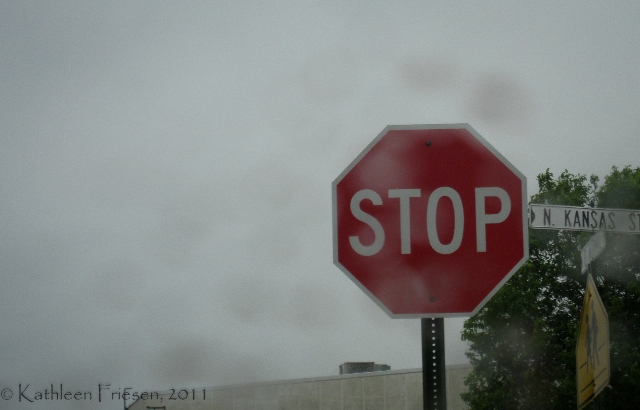
While I was driving down the road in the rain, wipers running at top speed, peering beyond the vehicle to the street and traffic, I came to a stop. The stop was both literal – at the stop sign – and figurative  – a mental stop sign.

The mental “stop sign” was part of an ongoing thought process from earlier today. This morning, I was having a conversation about organizational change and how to introduce change models to a leadership team. Another person in the conversation asked, “What would be a good metaphor for introducing a change model?”

Two hours later, driving through pouring rain, this presented itself: When I’m driving I see through the windshield. I use a windshield every day, but how often do I stop to think about the windshield itself?

One metaphor for a change model is a windshield. The windshield is allows us to drive safely in challenging weather conditions, protects us from bugs and thrown rocks. It also allows passengers to see clearly and ride in safety. Like the windshield, organizations and individuals have belief systems that allow us to “drive through” life experiences without thinking about the belief system or mental model.

Consider the windshield …. In the same way, a change model offers a “windshield” experience. It offers a mechanism for viewing the world. It offers a way to navigate the landscape ahead. And, just as windshield systems come with wipers and wiper fluid, change models include tools to navigate landscapes altered by adverse conditions and reduced visibility.

If you are an organization leader, I encourage you to get to reflect on the belief system and mental model that you use to navigate your world. Then I challenge you to research at least one new change model. As organizations face ongoing, discontinuous change, this is the equivalent of cleaning your windshield of bugs and dirt, topping off the windshield wiper fluid, and buying new wipers.

What is your preferred change model?

Our Maps of the World
The Dragon Next Door

Holy curiosity

The important thing is not to stop questioning. Curiosity has its own reason for existing. One cannot help but be in awe when he contemplates the mysteries of eternity, of life, of the marvelous structure of reality. It is enough if one  tries merely to comprehend a little of this mystery every day. Never lose a holy curiosity.
Albert Einstein

Idea for reflection -32

Return on Luck

I continue to be intrigued by Jim Collins and Morten Hansen’s ideas on “Return on Luck.” Now comes a longer piece in the New York Times: What’s Luck Got to Do With It? If you haven’t already begun reading their new book, Great by Choice,  you can read further about their idea in the article.

My summary in a earlier post focused on the importance of the “who” in luck. I continue to value my trusted advisors who have helped me make important decisions.

What is your perception on what luck has to do with it? Is luck important or do other factors weigh more heavily? Do you make the most of the chances you’ve been given?

On Football and Credibility

Lou Holtz, football coach, talks about how he created a team year-after-year. His college football teams changed personnel every year. But, his questions* to each person were always the same: Do you care about me? Can I trust you? Are you committed to the success of the team?

Holtz believed the answers to these questions are best given through actions. When we consistently act in an authentic and trustworthy manner, we will gain trust. But what do those words mean? And, how can we develop authenticity and trustworthiness in ourselves?

Authenticity arises from being yourself, which comes from the story you’ve lived. Being authentic means knowing and living your story. Authentic leaders are steady, confident, and consistent. They are the same person day-in and day-out.

Trustworthiness is made up of several things: sincerity, reliability, competence, and care. Sincerity is honesty: you say what you mean and mean what you say. Your opinions are backed by the facts and sound thinking. Reliability means you keep your  commitments and promises. Competence says you have the knowledge, skills, and resources to do your job. Caring is keeping other’s interests in mind as you act and make decisions. When we say someone is trustworthy, we may mean one or all of these things. Likewise, saying that someone is untrustworthy may mean they have failed at one or more of these things.

Leaders who are authentic and trustworthy have the ability to create and manage teams for each season. They mentor and teach others, developing capacity and connection, calling each person to develop their gifts and skills. They work with individuals, creating a team identity and purpose. They inquire into their team’s experience in order to know and live the team’s story along with their own.

I’ve written a longer article that includes questions for reflection as you consider Holtz’s questions for yourself.

*Holtz quote from “The Art of Innovation” by Tom Kelley, p. 85

Have you used any “bullets” lately?

Those of you who have attended one of Friesen Group’s training sessions on public speaking and presentation know that we recommend the minimalist approach to PowerPoint slides. So you may have already guessed that I’m not talking about those kind of bullets – you remember, the bulleted list.

Instead, I’m writing about an idea from Great by Choice. Collins and Hansen tell the story of the Captain of a warship that has a limited amount of gunpowder. One option is to use all of the gunpowder to fire one big cannonball to disable or destroy the other ship. Problem: if it misses, there are no resources left. The wise Captain will instead fire a few bullets first – “ping” – “ping” – “ping” – to discover the best trajectory. Once discovered, the remaining gunpowder can be used to fire the big cannonball – at the precise trajectory needed to accomplish the desired outcome.

A “bullet” in an organization is a calculated, creative test. It is a “low-cost, low-risk, and low-distraction” experiment. Successful organizations are disciplined and innovative. They try multiple ideas. They iterate, trying again, making adjustments, measuring carefully. If they fire a bullet that misses, they aren’t critically crippled. When they fire a bullet that hits its mark, they can commit additional resources to exploit the opportunity.

Need ideas for creating and firing “bullets?” IDEO and the Stanford d.school have published processes for doing disciplined, creative research that leads to results:

d.school Methods
Open IDEO

What “bullets” are you firing, measuring, and validating?

Commit to disruption