Skip to content

Posts tagged ‘Organization Development’

Insanely Simple

Obsession with simplicity is front and center in Insanely Simple by Ken Segall, the man who put the famous “i” in Apple’s product names. Even if you’re not an Apple fan, this book offers insight into the ways our organizations function. Segall looks at ten behaviors and values that support Apple’s value: simplicity.

He tells sticky stories about Apple and other companies. Sticky because they stick in my mind. I’ve been telling these stories to family and friends as I read, not waiting to finish the chapter before I’m saying, “Jon, listen to this one.”

The titles are based on Apple’s Think Different advertising campaign. The ideas focus on managing and leading effectively:

  1. Think Brutal. Openness and honesty mean no guessing at what managers are thinking and expecting.
  2. Think Small. Small groups of smart people who include the final decision maker will succeed quickly.
  3. Think Minimal. Communicate and focus on one theme that people will remember.
  4. Think Motion. Create project timelines that include the right timeframe and the right people.
  5. Think Iconic. Find and use an image that symbolizes your theme.
  6. Think Phrasal. Use simple sentences. Use simple words. “Simplicity is its own form of cleverness (p. 202).”
  7. Think Casual. Informal conversations connection, inspire, and create.
  8. Think Human. Intangibles are often more important than metrics.
  9. Think Skeptic. Don’t let a “no” or extra work stand in the way of acting with Common Sense.
  10. Think War. Use your bullets wisely. Remember the passion you have for your idea.

Keep your highlighter handy for the pithy quotes. Keep family and friends handy for the sticky stories. Choose the idea you’ll work with first. This book is light enough to be a summertime read and compelling enough to share with others in your organization.

How do you “Think Different”?

Review: Great by Choice
Ken Segall’s Blog

Resource: Meeting Matters

Read the entire article or browse the summary below. What are your meeting “pet peeves?”

Meeting after meeting after meeting quietly corrodes our spirits and our organizations. We are used to boring meetings, long meetings, meetings without a purpose. We are used to mediocre and downright bad meetings. We like to call them, but there are often limited benefits from attending.

Beyond the measurable wasted time, meetings matter. They matter because our organizations use them to make decisions, to have social interactions that create vital connections, and – most of all – they support change. Here are 10 “Golden Rules” that, when followed, can help to create more effective meetings:

  1. Avoid meetings.
  2. Limit invitations.
  3. Create and send an agenda in advance.
  4. Prepare and confirm.
  5. Begin and finish on time.
  6. Use meeting rules.
  7. Stick to the agenda.
  8. Create a space for each participant to air their ideas, thoughts, and opinions.
  9. Finish well.
  10. Follow up.

These “Golden Rules” sound like good ideas. Yet, we still go to ineffective meetings led by outside agencies, bosses, team members, and peers. Why? We feel obligated. But if you ask the meeting organizer, they will say that they feel obligated too. The meeting is a gathering called by someone who has no choice, attended by others who have no choice.

The good news: you can choose. The meeting system can change. Act. You are too effective and competent to put up with meetings that don’t work. Choose to change your own meeting behavior. Choose to make your own assessment of which meetings are worth your time, energy, and budget dollars. Change happens when each leader and manager chooses to transform themselves and their organization. The opportunity is presented. Game on.

Meetings and other wrecks
Overheard conversation

redux: Orbiting the Giant Hairball

It’s been almost two years since I did a series of posts on Gordon MacKenzie’s Orbiting the Giant Hairball. Recently Jon read the book. He read “hairball” stories aloud and told stories of his own as ideas percolated.

Reminded of the book’s continuing relevance, I’m choosing to run the risk of getting more emails and links from companies specializing in hairball management of the feline sort. I’m bringing the “hairball” posts back to the top of the reading list. And, if you want a light, but thought-provoking read for the upcoming summer season, I highly recommend the book!

Start here (Orbiting thought – Over and out) and follow the thread or begin with Orbiting thought #7 and thread your way to #1.

Related posts:

My teacher got rid of my imagination…
Meep, meep …!

If you choose to read the quotes or the book, which experiences come to mind as you read?

extrovert – introvert

Silence is lyrical. Silence is energy. Silence is time: The space of time between the pulling back of the arrow in the bow and its release.

Or …

Teams are fun. Meetings and parties are energy. People are motion: The speeding motion between the arrow’s release and the explosive arrival at the target.

Not long ago in a hiring discussion, I overheard someone proclaim, “Of course the person we hire needs to be an extrovert.” I cringed. On the Myers-Briggs introvert – extrovert scale, I fall slightly toward the introvert side. Surprised? You’ll find me leading organization processes, delivering training, and speaking publicly.

The confusion arises from a misunderstanding of the scale. In the original Myers-Briggs’ definition, the introvert and extrovert get their energy from different places. Extroverts are energized by the outer world of people and action. Introverts gain energy from an inner world of ideas and concepts. The scale has nothing to do with whether people get along with others, are confident public speakers, or provide good leadership.

The fact that different types of experiences energize people is not a sound hiring metric. Opportunities and challenges exist across the extrovert – introvert scale. For example, research with groups at the University of California, Santa Cruz demonstrated that while extroverts talked more in the groups, they had a wide-range of topics and were “light-hearted.” The introverts talked less and focused on one or two  serious topics. The extroverts appreciated feeling understood by having someone actively listening. The introverts appreciated the relaxed ease of the conversation (Quiet, p. 238-239).

Susan Cain’s Quiet: The Power of Introverts in a World that Can’t Stop Talking describes the value of extroverts and introverts in organizations.  She offers ideas about using the strengths of both sides of the scale to build organizational effectiveness. Wherever you fall on the introvert – extrovert scale, one key is tuning into the energy of those around you. Adjust your communication patterns to meet them in their comfort zone and invite them into the conversation.

How does your organization work to embrace the strengths of extroverts and introverts? What does your preference on the scale mean in your life?

Susan Cain’s blog: The Power of Introverts
Susan Cain’s book: Quiet: The Power of Introverts in a World that Can’t Stop Talking
Related link forwarded to me by a friend: The Introverted Leader

Note: I followed Cain’s choice to use the word extrovert from the common usage, rather than the word extravert which is found in the research literature (Quiet, p. 271).

Idea for reflection – 33

Vitality shows in not only the ability to persist
but the ability to start over.
F. Scott Fitzgerald

Idea for reflection – 32
Sustaining Change

persistance of memory – What have you learned today?

My Aunt Elizabeth and I were talking last night about the fact that each of us remembers different shared experiences. What she recalls easily – I do not, and visa versa.  I remember my Uncle Don taking us for a drive on Interstate 80 in Nebraska before it was paved. We drove down the paved ramp at Beaver Crossing onto the eastbound lanes, then covered only in gravel. We cruised with the convertible top down at 20 m.p.h to the next exit at Milford. What makes that memory so strong for me? Are memories personal or are they constructed through the stories we tell?

Neuroscience is still exploring how memories are made and persist. Yi Zuo of the University of California, Santa Cruz, and her colleagues assessed how dendrites (branches between neurons) form in mice based on three different types of activities, compared to a control group that did nothing out of the ordinary. Her results: dendrites appear, grow, persist, and disappear in response to training and learning.

 “I think it is a very active process,” Zuo says. “The neurons work very hard to form clusters, to place spines close to one another. Even after a short training period on the first day, a mouse makes a lot of new spines—they might make double what they make in an ordinary day, but these spines are not clustered. Only after repeated training are they clustered.” Previous work in her lab demonstrated that new neural connections form within an hour of the training session.

As human beings, memories are created because our brains are constantly open to change. Memories grow and persist when we are actively experiencing, discovering, learning, and telling our stories. Life-long learning is essential.

What are you actively learning and discovering? What memories have shaped you or your organization?

The Biology of Learning
Spine Tuning: Finding Physical Evidence of How Practice Rewires the Brain

An invitation to rethink teambuilding

A team is a group of people on a project with a common task and deadline. They depend on each other to produce successful outcomes, communicating constantly and usually informally. They need each other to “get it done.” When completed, the group has the sense that “we” did it! Examples of a team include a basketball team, a project team, or an ambulance crew. Organizational research demonstrates that teams increase their effectiveness and efficiency through “teambuilding” interventions.

An organization is more often a tribe or, in the case of a large organization, a federation. A federation is a collection of groups that work together to use common resources or promote common interests. The managers of individual groups protect the interests of their own group whether budget dollars, resources, or objectives. In meetings the group managers bring their own aims and perspectives. They promote their own group. A federation is often full of political lobbying and conflict, leading to a lack of consensus. It is easy to see why federation managers would ask for “teambuilding.”

A tribe is a group with a shared identity and a sense of shared mission and purpose. They may have a functional “head” and a “team spirit.” There may be smaller groups or individuals with independent responsibilities that support the larger goals. There are formal procedures and processes. Communication is a combination of formal and informal. There is an overall structure that allows work to get done. While work is judged individually, few people would put the organization at risk so that they could be successful. Usually emotional ties are strong; people care about each other and the organization. Can a tribe benefit from “teambuilding?”

Most managers are not managing teams, but rather federations or tribes. So, what do managers really want when they ask for a “teambuilding” intervention? In my experience, they want people within the group to forge a strong sense of belonging, to be willing to take the needs of the whole organization into account, to be willing to sacrifice for the good of the group. They want to be a group who attracts others to join.

Simple activities that help to forge a sense of belonging include sharing meals together and participating in community service. Informal activities could be a time of storytelling around a specific topic such as, “how I chose to become a part of this organization.” Formal interventions like a World Café or Appreciative Inquiry can increase individual’s sense of belonging and identifying with the group. Discover ways to share the inspiration that comes with increased personal connection and commitment – inspiration and energy attracts others.

I invite you to rethink “teambuilding” in your organization.

On Football and Credibility

Together alone

I am guilty of contributing to the rise of what Susan Cain calls the New Groupthink. I have clients do exercises in “table groups.” I conduct brainstorming sessions. I observe companies creating tiny, open “collaborative” workspaces. They build on the concept with flexible workspaces – the kind where the employee gets a rolling cart and choses a new space each day.

Are these suddenly outdated? No. Research shows that people are happy in a workplace where they have friends, a trusting atmosphere, and a free exchange of ideas. But, research supports the other side of the equation too: the need for personal space to work in quiet and solitude.

Privacy and uninterrupted time allow for learning and creating new ideas. The freedom of space and time allows our brains to quiet and focus on the one task at hand. IPNB tells us that autonomy motivates and stimulates creative thinking. Cain quotes organizational psychologist, Adrian Furnham. “If you have talented and motivated people, they should be encouraged to work alone when creativity or efficiency is the highest priority.” Companies who offer employees private space benefit from increased quality and quantity of work.

The counterintuitive evidence in the research is that people who collaborate remotely outperform other teams. While more research is needed, the hypothesis is that the electronic distance allows us to be “together alone.”

There is a balance: a need for interaction and idea exchange – and – a need for privacy and uninterrupted time to think. I’m considering how I structure my engagements, classroom, and work time.

What ideas does this stir for you?
(Note: Blogs fit into the “together alone” category!)

Read the full article: The Rise of the New Groupthink
Creating a space for critical thinking

Imagining new maps

How do we create the maps that we use to navigate everything from the work environment to our relationships to the grocery store? What happens when change, either gradual or catastrophic, requires us to re-imagine our maps? These questions re-emerged as I began with reflecting on a blog post by Shirley Showalter, writing about memoir and walking in the city.

And, the questions appeared in recent conversations with leaders. The conversations about navigating organizational waters roiled by the economy, a new generation of workers, and shifts in how people communicate and connect. Thomas Friedman’s recent column asks us to re-imagine the map we call leadership, “The role of the leader now is to get the best of what is coming up from below and then meld it with a vision from above.”

So here, to stimulate your map-making imagination, is an excerpt from The BFG, by Roald Dahl:

In the leading machine the Head of the Air Force was sitting beside the pilot. He had a world atlas on his knees and he kept staring first at the atlas, then at the ground below, trying to figure out where they were going. Frantically he turned the pages of the atlas.

‘Where the devil are we going?’ he cried.

‘I haven’t the foggiest idea,’ the pilot answered. ‘The Queen’s orders were to follow the giant and that’s exactly what I’m doing.’

The pilot was a young Air Force officer with a bushy moustache. He was very proud of his moustache. He was also quite fearless and he loved adventure. He thought this was a super adventure. ‘It’s fun going to new places,’ he said.

‘New places!’ shouted the Head of the Air Force. ‘What the blazes d’you mean new places?’

‘This place we’re flying over now isn’t in the atlas, is it?’ the pilot said, grinning.

‘You’re darn right it isn’t in the atlas!’ cried the Head of the Air Force. ‘We’ve flown clear off the last page!’

‘I expect that old giant knows where he’s going,’ the young pilot said.

‘He’s leading us to disaster!’ cried the Head of the Air Force. He was shaking with fear. In the seat behind him sat the Head of the Army who was even more terrified.

‘You don’t mean to tell me we’ve gone right out of the atlas?’ he cried, leaning forward to look.

‘That’s exactly what I’m telling you!’ cried the Air Force man. ‘Look for yourself. Here’s the very last map in the whole flaming atlas! We went off that over an hour ago!’ He turned the page. As in all atlases, there were two completely blank pages at the very end. ‘So now we must be somewhere here,’ he said, putting a finger on one of the blank pages.

‘Where’s here?’ cried the Head of the Army.

The young pilot was still grinning broadly. He said to them, ‘That’s why they always put two blank pages at the back of the atlas. They’re for new countries. You’re meant to fill them in yourself.’

Where is your organization in uncharted waters? Is the way you lead changing?

a look AT the windshield
Turning off the autopilot

a look AT the windshield

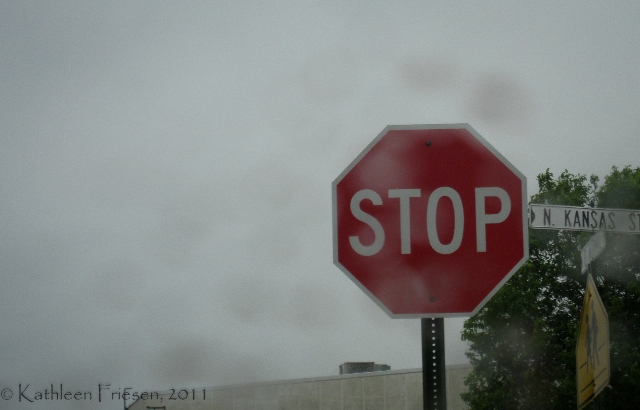
While I was driving down the road in the rain, wipers running at top speed, peering beyond the vehicle to the street and traffic, I came to a stop. The stop was both literal – at the stop sign – and figurative  – a mental stop sign.

The mental “stop sign” was part of an ongoing thought process from earlier today. This morning, I was having a conversation about organizational change and how to introduce change models to a leadership team. Another person in the conversation asked, “What would be a good metaphor for introducing a change model?”

Two hours later, driving through pouring rain, this presented itself: When I’m driving I see through the windshield. I use a windshield every day, but how often do I stop to think about the windshield itself?

One metaphor for a change model is a windshield. The windshield is allows us to drive safely in challenging weather conditions, protects us from bugs and thrown rocks. It also allows passengers to see clearly and ride in safety. Like the windshield, organizations and individuals have belief systems that allow us to “drive through” life experiences without thinking about the belief system or mental model.

Consider the windshield …. In the same way, a change model offers a “windshield” experience. It offers a mechanism for viewing the world. It offers a way to navigate the landscape ahead. And, just as windshield systems come with wipers and wiper fluid, change models include tools to navigate landscapes altered by adverse conditions and reduced visibility.

If you are an organization leader, I encourage you to get to reflect on the belief system and mental model that you use to navigate your world. Then I challenge you to research at least one new change model. As organizations face ongoing, discontinuous change, this is the equivalent of cleaning your windshield of bugs and dirt, topping off the windshield wiper fluid, and buying new wipers.

What is your preferred change model?

Our Maps of the World
The Dragon Next Door